Tracked My Sleep for 90 Nights: How Automated Health Reports Transformed My Mornings
Ever wake up feeling like you’ve barely rested, even after eight hours in bed? I did—until I started paying attention to what my body was trying to tell me at night. With a simple wearable and an app that builds nightly health summaries, I began seeing patterns I’d ignored for years. This isn’t about chasing perfection; it’s about understanding yourself better and waking up more refreshed, focused, and ready for the day. Here’s how small tech changes made a real difference.
The Morning Struggle That Started It All
For as long as I can remember, mornings were something I survived, not enjoyed. My alarm would go off, and I’d hit snooze—once, twice, sometimes three times. When I finally dragged myself out of bed, I felt heavy, like my body hadn’t fully rebooted from the night before. I’d shuffle to the kitchen, pour a big cup of coffee, and hope it would kick in before my kids started asking questions or my workday began. And even with caffeine, I’d feel foggy until at least 10 a.m.
What confused me most was that I was doing everything “right.” I went to bed around the same time every night. I avoided heavy meals late in the evening. I wasn’t stressed—or at least, no more than anyone else juggling family, work, and life. So why did I still wake up feeling like I hadn’t slept at all? My husband gently pointed out that I seemed more short-tempered in the mornings, and I noticed my focus at work would dip by midday. I was present, but not really there.
Then one weekend, a friend mentioned offhand that her fitness tracker had flagged her sleep as “poor quality” two nights in a row, even though she thought she’d slept fine. That comment stuck with me. I realized I’d never actually measured my sleep—I just assumed it was okay because I was in bed for eight hours. But time in bed doesn’t always equal restful sleep. That moment lit a small spark. What if my body had been sending me signals every night, and I just hadn’t been listening?
Discovering the Power of Nightly Health Reports
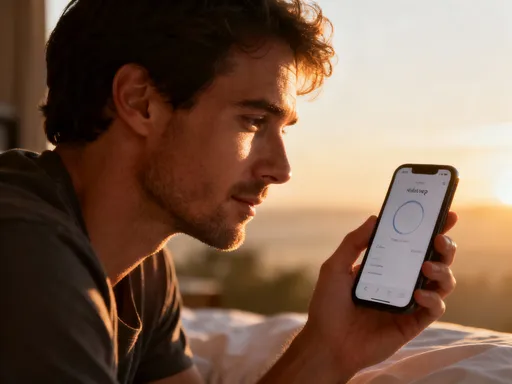
I decided to try a sleep-tracking wearable—one of the popular, widely available models that syncs with a smartphone app. I didn’t expect much. I thought maybe it would tell me how long I was asleep, and that would be it. But what I got was so much more. Every morning, without me doing a single thing, my phone showed a simple, clean summary of my night: how long I slept, how much of that was deep sleep, how many times I woke up, and even an estimate of how recovered my body felt.
What made it different from other apps I’d tried was that it didn’t overwhelm me with charts and technical terms. Instead, it used plain, friendly language—like a caring friend checking in. One morning it said, “You spent only 15% of your sleep in deep rest—aim for more tomorrow.” Another day: “Your breathing was slightly irregular during the night. Try a relaxing routine before bed.” These weren’t cold numbers; they were insights, gently delivered.
After about two weeks, patterns started to emerge. On nights when I felt groggy, the report often showed low deep sleep or high heart rate variability. On mornings when I felt surprisingly alert, the data confirmed longer deep sleep and steady breathing. It was like finally having a window into my body’s nighttime world. I wasn’t just guessing anymore. I had proof—simple, visual, and personal—that my sleep quality directly shaped how I felt the next day.
And the best part? I didn’t have to do anything extra. No logging meals, no manual inputs, no complicated settings. The device worked while I slept, quietly gathering data. All I had to do was glance at my phone when I woke up. That ease of use made it something I could stick with, not another chore to add to my list.
Connecting Bedtime Habits to Real-Life Outcomes
Once I had the data, I started asking myself honest questions: What was I doing—or not doing—that might be affecting my rest? I began paying attention to my habits in the hours before bed. Did scrolling through my phone make a difference? What about eating dinner late? Was my evening glass of wine helping me relax, or was it secretly disrupting my sleep?
I decided to run little experiments—nothing drastic, just small changes to see what would happen. One week, I turned off all screens—phone, tablet, TV—an hour before bed. I replaced that time with reading a physical book or listening to soft music. The next week, I moved dinner up by 90 minutes and avoided eating anything heavy after 7 p.m. Then, I cut out the evening wine for three nights in a row, which was harder than I expected.
The reports didn’t lie. On the screen-free nights, I fell asleep faster and spent more time in deep sleep. The early dinner week showed a noticeable improvement in my recovery score. And when I skipped the wine? My breathing patterns were smoother, and I woke up feeling more refreshed—even though I missed that moment of relaxation at the end of the day.
What surprised me most was how quickly the changes showed up. It wasn’t a slow, gradual shift. Sometimes, just one good night with better habits made a difference in how I felt the next morning. I realized my choices weren’t just small routines—they were active ingredients in my well-being. And for the first time, I could see the direct link between what I did at night and how I showed up in the morning.
How Automation Simplified My Routine
Let’s be honest—most of us don’t have the energy or time to track every detail of our health. I’ve tried journaling, logging food, counting steps, and it always ends the same way: I start strong, then life gets busy, and I fall off. But this sleep-tracking system was different because it didn’t ask anything of me. It was completely passive. I didn’t have to remember to press a button or enter data. I just wore the device and lived my life.
The automation was the real game-changer. Every morning, my health report was ready—like a personal check-in waiting for me. It included not just sleep data, but also resting heart rate, breathing rate, and a recovery score based on how well my body bounced back overnight. Some days, it even offered a gentle suggestion, like “Your body is still recovering from yesterday—consider a lighter workout today.”
That consistency made all the difference. Because I didn’t have to think about it, I didn’t have to rely on willpower. It wasn’t another habit to build; it was a tool that worked for me, quietly and reliably. Over time, I began to look forward to that morning summary. It wasn’t about judgment or perfection—it was about awareness. And that awareness gave me power. I wasn’t stuck in the dark anymore, guessing why I felt tired. I had information, and with that, I had choices.
Plus, the app learned over time. It started recognizing my personal patterns—like how my sleep dipped during stressful weeks or improved when I exercised in the morning. It didn’t compare me to some ideal standard. Instead, it helped me understand my body, on my terms. That personalization made it feel less like a tech gadget and more like a trusted companion on my wellness journey.
Optimizing My Evening Workflow with Tech Insights
With clear feedback from the reports, I started redesigning my evenings—not with strict rules, but with intention. I wanted to create a wind-down routine that actually supported my body’s natural rhythm. I began by setting a “digital sunset” at 8:30 p.m., turning off screens and switching to soft lighting. Then, I made a warm cup of herbal tea—usually chamomile or passionflower—and spent 10 minutes journaling. I’d write down three things I was grateful for, one thing I did well that day, and any lingering thoughts I wanted to let go of.
I also added a five-minute breathing exercise, guided by a simple meditation app. Inhale for four counts, hold for four, exhale for six—nothing fancy, but it helped slow my mind. I timed this routine to align with when my body naturally starts winding down, usually around 9 p.m., based on the cortisol drop patterns the app had shown me over time.
Within just a few days, the reports reflected the change. My sleep onset—how long it took me to fall asleep—shortened from an average of 35 minutes to under 15. My deep sleep increased, and my nighttime awakenings became less frequent. I wasn’t just sleeping longer; I was sleeping better. And the best part? I didn’t feel deprived or restricted. This new routine didn’t feel like a chore—it felt like a gift I was giving myself.
What I love most is that it became a ritual I actually looked forward to. Instead of rushing through the evening to collapse into bed, I began to savor those quiet moments. They became my time—just for me—before the next day began. And because the tech confirmed the benefits, I had the motivation to keep going, even on busy or stressful nights.
Sharing Insights with My Family—And Seeing Changes in Them Too
I didn’t set out to turn my family into sleep trackers, but once I started sharing what I was learning, curiosity spread. I mentioned to my sister how I’d improved my sleep by adjusting my evening habits, and she admitted she’d been feeling tired lately too. She decided to try the same wearable, and within a week, her report showed she was waking up multiple times a night—often around 3 a.m.
She started investigating possible causes. Was it stress? Diet? Then she noticed the room temperature was rising in the middle of the night. She has an older home with uneven heating, and her bedroom would get stuffy around 2 a.m. She adjusted her smart thermostat to cool the room slightly during those hours, and within two nights, her sleep quality improved dramatically. Her reports showed fewer awakenings and longer stretches of deep sleep. She told me, “I didn’t realize how much temperature was affecting me. Now I wake up feeling like I’ve actually rested.”
Even my teenage daughter got curious. She’s always been a late-night texter, but after seeing how screen time affected my sleep, she agreed to try a “no phones in bed” rule for a week. She used a real alarm clock instead. Her grades didn’t magically improve, but she said she felt less groggy in the morning and more focused in her first two classes.
What I didn’t expect was how this shared focus on sleep brought us closer. We started talking about rest like we talk about eating vegetables or drinking water—something essential, not optional. We’d compare notes at breakfast: “Did you sleep okay?” “How’s your recovery score?” “Try lowering the thermostat tonight.” It wasn’t about pressure or perfection. It was about care—simple, practical, and kind.
A Smarter, Calmer Life—One Night at a Time
Looking back on those 90 nights, I can honestly say this journey changed more than just my sleep. It changed how I see myself and how I move through my days. I wake up now without that heavy dread. I get out of bed more easily. I’m more patient with my kids, more present with my husband, and more focused at work. I don’t rely on coffee to function—I drink it because I enjoy it, not because I need it.
The automated health reports didn’t fix everything. Life still gets busy. Some nights are still restless. But now, I have clarity. I know what helps me and what doesn’t. I can make small adjustments—like skipping wine, turning off screens, or cooling the room—and see real results. That sense of control is priceless. It’s not about chasing a perfect score every night. It’s about progress, awareness, and self-respect.
What I’ve learned is that rest isn’t passive. It’s not just something that happens when we close our eyes. It’s something we can nurture, protect, and improve—with a little help from technology. And the most beautiful part? When we take better care of ourselves, we have more to give to the people we love. I’m not just sleeping better. I’m living better. And after years of feeling run down, that feels like a quiet kind of miracle.