You Won’t Believe These Hidden Photo Spots in Salamanca
Salamanca’s golden stone buildings glow like they’re lit from within, especially at sunset. I came for the history but stayed for the architecture—every corner feels like a postcard waiting to happen. From gothic spires to baroque facades, this city is a visual feast. If you love capturing beauty through your lens, Salamanca’s streets will steal your heart and fill your gallery. Let me show you the spots that made my camera roll nonstop.
The Heartbeat of Salamanca: Plaza Mayor as a Photographer’s Dream
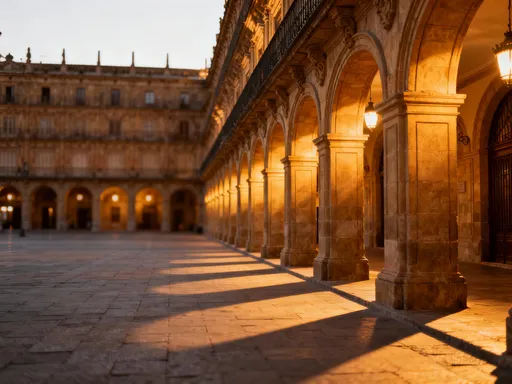
Plaza Mayor is not just Salamanca’s central square—it is the soul of the city, pulsing with life, light, and architectural elegance. Enclosed by two levels of graceful arcades adorned with sandstone columns and intricate medallions, the plaza offers a symmetrical composition that delights both the eye and the lens. Each of the 256 arches frames a new perspective, turning even casual strolls into cinematic sequences. Built in the 18th century, the plaza has long served as a gathering place for festivals, markets, and daily life, making it a living canvas rather than a static monument. For photographers, this means dynamic energy layered over timeless design.
The magic of Plaza Mayor unfolds differently throughout the day. At dawn, soft morning light spills over the eastern arcades, casting long shadows that emphasize texture and depth. Midday brings bright, even illumination, ideal for capturing the full scope of the plaza’s ornate details—from the royal coat of arms above the central balcony to the delicate carvings on the keystones. But it is during golden hour that the square truly transforms. As the sun dips behind the cathedral towers, the entire plaza seems to ignite in warm amber tones, the sandstone glowing as if lit from within. This is the moment to position yourself at one of the four cardinal corners and shoot toward the center, using the converging arches to create strong leading lines.
To avoid crowds without sacrificing atmosphere, arrive just before sunrise or linger after 8 p.m., when most day-trippers have left. Weekdays offer quieter conditions than weekends, especially during local market hours on Thursday and Sunday mornings, when the plaza fills with vendors and chatter. For a more elevated perspective, climb the stairs to the upper galleries—some cafes allow access to their terraces with a small purchase. A wide-angle lens (24mm or wider) helps capture the full grandeur, while a telephoto lens can isolate specific architectural details or candid moments of people enjoying the space. The key is patience: wait for the right gesture—a child chasing pigeons, a couple pausing for a photo, sunlight hitting a medallion just right—and let the scene unfold naturally.
University of Salamanca: Where Knowledge Meets Stone
Founded in 1218, the University of Salamanca stands as one of the oldest continuously operating universities in Europe, a place where intellectual history is carved into stone. Its Plateresque façade—named for its silversmith-like detail—is a masterpiece of late Gothic and early Renaissance design. Every inch of the portal tells a story: saints, scholars, mythological creatures, and astrological symbols are woven into an elaborate tapestry that invites close inspection. This is not just a building; it is a visual encyclopedia of the Renaissance mind, where science, faith, and art converged.
For photographers, the university’s main entrance offers one of the most rewarding close-up opportunities in the city. The famous little frog, carved into the stonework just above a skull, has become a symbol of luck and a favorite subject for visitors. Legend says that spotting the frog brings good fortune—a challenge that draws hundreds of eyes upward each day. To capture it clearly, use a zoom lens or macro setting, and visit in the late morning when sunlight strikes the upper levels directly. A polarizing filter can help reduce glare on the stone, revealing subtle textures and shadows in the carvings.
Inside the historic campus, photography is permitted in common areas such as the Patio de Escuelas and the ancient lecture halls, though flash and tripods are typically restricted out of respect for students and staff. The contrast between solemn academic tradition and the exuberant stonework creates a compelling narrative: here, knowledge was never dry or austere—it was celebrated with artistry and pride. For wider exterior shots, step back into Calle Anaya or position yourself across the narrow street to include the full height of the façade against the sky. Early evening light enhances the warmth of the stone, while long exposures at dusk can highlight the subtle illumination of the entrance, creating a sense of quiet reverence.
Responsible photography means being mindful of the space’s ongoing academic function. Avoid blocking walkways, keep voices low, and refrain from photographing individuals without permission. The university is not a museum frozen in time—it is a living institution where students still walk the same corridors as Christopher Columbus once did. By honoring that presence, your images gain authenticity and depth, reflecting not just beauty but continuity.
New Cathedral (Catedral Nueva): Reaching for the Sky
Rising beside its older counterpart like a Renaissance vision of divine ambition, the New Cathedral is a breathtaking fusion of Gothic, Renaissance, and Baroque architecture. Construction began in the 16th century and continued for over two centuries, resulting in a layered masterpiece that reflects the evolving tastes and technologies of its time. From the outside, the cathedral’s soaring spires and richly decorated portal command attention, but it is the interior that leaves visitors speechless. The star-studded dome, painted in deep blue and gold, seems to float high above the nave, a celestial canopy that transforms light into wonder.
Photographing the New Cathedral requires thoughtful preparation, especially indoors. Natural light filters through high stained-glass windows, creating dramatic beams that shift throughout the day. The best illumination occurs between 10 a.m. and 2 p.m., when sunlight enters from the east and highlights the altar and dome. A fast wide-angle lens (f/2.8 or wider) is ideal for capturing the vast interior without excessive noise. Because flash is often prohibited to preserve artwork and maintain reverence, raising your ISO and using a tripod (where permitted) will help achieve sharp, well-exposed images.
One of the greatest challenges is conveying the cathedral’s immense scale. Standing at the back of the nave and shooting upward emphasizes verticality, while including small figures—worshippers, tourists, or guides—provides a sense of proportion. The dome, best viewed from the central crossing, rewards patient framing: wait for the light to align just right, or capture the subtle movement of visitors gazing upward. Exterior shots are equally compelling, particularly from the small plaza between the two cathedrals, where both structures can be framed together, illustrating their architectural dialogue across centuries.
Entry to the cathedral is modestly priced and includes access to the tower, which offers one of the best panoramic views in the city. Climbing the narrow spiral staircase is well worth the effort, as the elevated vantage point allows you to photograph the cathedral’s intricate roofline, the surrounding historic district, and the distant hills bathed in afternoon light. Visit on a clear day for maximum visibility, and consider shooting at different focal lengths—from wide landscapes to tight details of gargoyles and finials.
Old Cathedral (Catedral Vieja): A Glimpse into Medieval Grandeur
Built in the 12th century, the Old Cathedral is a Romanesque treasure that predates its grander neighbor by centuries. Though partially incorporated into the New Cathedral complex, it remains a distinct and deeply atmospheric space. Its most striking feature is the dome, supported by massive pillars and decorated with a 12th-century fresco of Christ in Majesty—a rare surviving example of Romanesque painting in Spain. The air inside is cool and still, carrying the weight of centuries of prayer and quiet reflection. Unlike the ornate drama of the New Cathedral, the Old Cathedral speaks in hushed tones, its beauty found in solidity, shadow, and the play of light through small, arched windows.
For photographers, this is a place of subtlety and texture. The rough-hewn stone walls, the soft glow of candlelight, and the intricate ironwork of the choir screen offer endless opportunities for intimate compositions. Because natural light is limited, a higher ISO setting and steady hand (or permitted tripod) are essential. A prime lens with a wide aperture helps isolate details such as the carved capitals, the ancient baptismal font, or the revered Santo Cristo de la Luz crucifix, believed by many to have miraculous origins. The crucifix, adorned with silver and jewels, is often softly lit, creating a natural focal point for portraits or devotional-style shots.
Despite its central location, the Old Cathedral often feels like a hidden sanctuary, less crowded and more contemplative than its neighbor. This makes it ideal for unhurried exploration and mindful photography. Visit in the late afternoon, when the last rays of sunlight filter through the eastern windows, casting long shadows across the floor. The contrast between light and dark enhances the sense of depth and mystery, turning ordinary scenes into evocative images. Because this is an active place of worship, silence and discretion are expected. Avoid using flash, and be respectful of any religious services or private moments.
One of the most powerful ways to photograph the Old Cathedral is to emphasize its continuity with the present. Capture a modern visitor pausing in quiet awe, a beam of light falling across an ancient manuscript in the museum section, or the reflection of the dome in a polished stone floor. These images do more than document architecture—they tell stories of enduring faith and human connection across time.
Casa de las Conchas: When Shell Patterns Tell a Story
Just a short walk from Plaza Mayor, Casa de las Conchas is a 15th-century mansion unlike any other in Salamanca. Its façade is covered in over 300 sculpted scallop shells, a striking symbol of the Order of Santiago, to which its original owner, Rodrigo Díaz de Vivar, belonged. The shells, carved in sandstone and arranged in geometric patterns, give the building a textured, almost otherworldly appearance. Blending Gothic structure with Mudejar craftsmanship, the house stands as a testament to the cultural fusion that shaped medieval Spain. Today, it serves as a public library and cultural center, yet its exterior remains one of the city’s most photogenic surprises.
What makes Casa de las Conchas special is not just its uniqueness, but its quiet presence. Unlike the grand plazas and cathedrals, it doesn’t announce itself with scale—it reveals itself slowly, detail by detail. A close-up shot of a single shell, with sunlight highlighting its grooves and shadows, can become a study in texture and symmetry. Reflections in the building’s windows often capture passing clouds or the silhouette of a pedestrian, adding layers of meaning and movement. At night, the façade is softly illuminated, transforming the shells into glowing emblems that stand out against the dark stone.
For creative framing, try shooting from a low angle to emphasize the verticality of the shells, or use a telephoto lens to compress the pattern into an abstract mosaic. The surrounding street, Calle Libreros, slopes gently, allowing for dynamic compositions that include the building in context with the city’s rooftops and spires. Visit in the early morning to avoid foot traffic, or return after dusk when the lighting enhances the building’s ethereal quality. Because it is a functioning public space, interior photography is limited to designated areas, but the exterior alone offers more than enough material for a compelling series.
Casa de las Conchas reminds us that beauty often lies in the details—the symbols we overlook, the stories behind the stones. It is a place where history is not shouted but whispered, where a simple shell becomes a gateway to a deeper understanding of identity, faith, and artistry.
Walking the Historic Streets: Unexpected Details Around Every Corner
Beyond the famous landmarks, Salamanca’s true photographic soul lies in its quiet streets and hidden courtyards. Calle Toro, Calle Escolares, and Calle Prior are lined with centuries-old buildings featuring wrought-iron balconies, wooden doors studded with nails, and walls worn smooth by time. These streets do not demand attention—they invite discovery. A sunlit archway, a potted geranium on a windowsill, a cat stretching on ancient stone steps—these fleeting moments are the quiet poetry of the city.
Slow walking is the best photography strategy here. Carry a lightweight camera or even a smartphone, and keep your eyes open for contrasts: light and shadow, texture and smoothness, stillness and motion. One morning, I turned down a narrow alley and found a courtyard open to the sky, its walls covered in ivy and its center occupied by a single stone fountain. No signs, no crowds—just a moment of unexpected beauty. These are the images that feel most personal, most authentic.
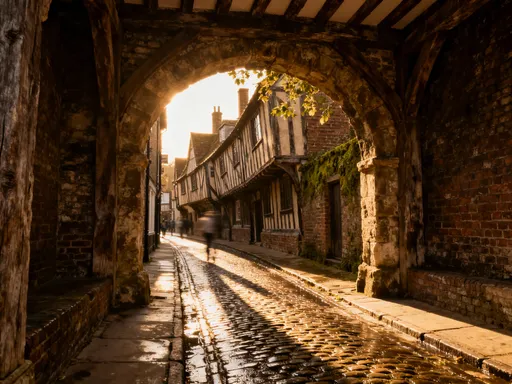
Look for reflections in puddles after a light rain, patterns in cobblestones, or the way afternoon light slices through a narrow passage. Iron grilles often frame interior gardens or flower boxes, creating natural vignettes. Door knockers, weather vanes, and centuries-old plaques offer rich subjects for macro photography. Don’t rush. Sit on a bench, have a coffee, and let the street life unfold. A baker opening his shop, a student rushing to class, an elderly woman watering her plants—these are the living elements that bring historical architecture to life.
Some of my most cherished photos from Salamanca were taken without a tripod, without planning, without even realizing I was making art. They emerged from presence, from paying attention. In a world of curated feeds and perfect compositions, these imperfect, spontaneous moments often resonate the most. They remind us that travel photography is not just about capturing places—it’s about remembering how they made us feel.
Sunset at the Roman Bridge: Where Past and Present Meet
No photographic journey through Salamanca is complete without a visit to the Roman Bridge, a medieval structure that spans the Tormes River and connects the historic city to the quiet hills beyond. Originally built by the Romans and later rebuilt in the 13th century, the bridge is a symbol of endurance, its stone arches standing firm against centuries of floods and time. But for photographers, it is also a perfect stage for one of the most magical daily events: sunset.
As the sun descends, it casts a golden glow across the river, illuminating the bridge’s weathered stonework and the distant silhouettes of the two cathedrals. From the midpoint of the bridge, you can frame both towers rising above the city, connected by the flowing water below. This single view encapsulates Salamanca’s architectural timeline—Roman foundations, medieval engineering, Renaissance ambition, and Baroque flourishes—all visible in one sweeping panorama. A wide-angle lens captures the full scene, while a telephoto lens can isolate the cathedral spires against the colored sky.
The bridge is also alive with movement. Locals stroll in the evening, couples pause for quiet moments, and birds wheel across the twilight sky. These human and natural elements add warmth and narrative to your images. Long exposures (2–5 seconds) can blur the water into a smooth mirror, reflecting the warm hues of the sky and the soft lights of the city. Use a tripod for stability, and consider a neutral density filter if shooting during bright twilight.
Arrive at least 30 minutes before sunset to secure a good position and watch the light evolve. Weekdays are quieter than weekends, and spring or autumn offers the most balanced light and comfortable temperatures. After your shoot, take a slow walk back into the city, following the riverbank path. The transition from quiet nature to bustling streets mirrors the journey you’ve captured through your lens—a harmony of past and present, stillness and life.
Salamanca isn’t just a city of stone—it’s a living gallery where every photograph tells a story of time, craft, and light. By chasing these architectural gems, you’re not only capturing images, but connecting with centuries of artistry. Pack your lens, slow down, and let the city reveal itself—one frame at a time.