You Won’t Believe What I Ate in Lucknow — Pure Food Magic
Lucknow isn’t just a city — it’s a flavor explosion waiting to happen. I went thinking I knew Indian food, but left realizing I’d barely scratched the surface. From sizzling kebabs to buttery biryanis, every bite told a story of tradition, patience, and spice. If you're chasing real, soul-deep food culture, this is ground zero. Let me take you through the streets where aroma guides your steps and every meal feels like a celebration.
Arrival in Lucknow: First Bites, First Impressions
The moment I stepped off the train at Lucknow Charbagh, the air wrapped around me like a warm, spiced embrace. It wasn’t just heat — it was the scent of cumin, cardamom, and slow-roasting meat rising from nearby grills, mingling with the faint sweetness of saffron and fried dough. The station itself, an elegant colonial relic with arched corridors and tiled floors, stood in quiet contrast to the culinary storm just beyond its gates. Within minutes, I found myself drawn to a small cart near the exit, where a vendor was pressing minced meat into flat patties and slipping them onto a glowing charcoal tawa. He handed me a freshly cooked *shami kebab* wrapped in newspaper, with a squeeze of lemon and a sliver of raw onion. That first bite — crisp on the outside, tender within, fragrant with coriander and ginger — was a revelation. It wasn’t fancy, but it was honest, deeply seasoned, and unmistakably alive.
From Charbagh, I made my way to Aminabad, one of the city’s oldest markets, where food isn’t just sold — it’s performed. Narrow lanes buzzed with energy: women in bright sarees haggled over vegetables, rickshaws weaved through crowds, and the call of “garam garam!” echoed from tea stalls and snack vendors. What struck me most wasn’t the quantity of food, but the care behind it. Unlike the fast-paced street eats of Delhi or Mumbai, Lucknow’s food culture moves at its own rhythm. Dishes are not rushed. Meats are marinated for hours, sometimes overnight. Spices are toasted and ground in small batches. Even the breads — like *sheermal* and *naan* — are baked slowly in tandoors that have been fired for generations. This is food made with intention, not just for hunger, but for honor.
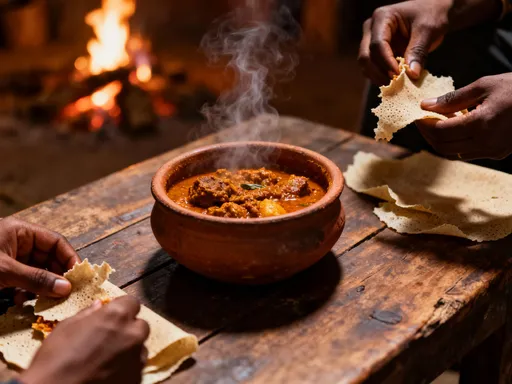
One evening, I stopped at a modest stall known only to locals, tucked between a sari shop and a book vendor. The owner, an elderly man named Aslam, served *nihari* from a large copper pot that had been simmering since 3 a.m. He ladled the rich stew into a steel bowl, topped it with ginger juliennes, fresh coriander, and a drizzle of ghee, then handed me a piece of warm naan. As I ate, he explained that this dish was once served to nawabs at dawn after long nights of poetry and music. In Lucknow, even a simple meal carries history. That night, sitting on a wooden stool under a flickering streetlamp, I realized I wasn’t just eating — I was being welcomed into a centuries-old tradition of flavor, grace, and quiet pride.
The Heart of Awadhi Cuisine: What Makes It Unique
Lucknow’s culinary soul lies in Awadhi cuisine, a refined tradition born in the royal kitchens of the 18th and 19th centuries. When the Mughal Empire began to decline, many chefs and nobles migrated east from Delhi to the court of the Nawabs of Awadh, bringing with them a legacy of rich, aromatic cooking. In Lucknow, this cuisine evolved into something distinct — less fiery than Punjabi food, less coconut-heavy than South Indian fare, and deeply focused on balance, fragrance, and texture. The philosophy isn’t about overwhelming the palate, but about guiding it gently through layers of flavor, like a well-composed piece of music.
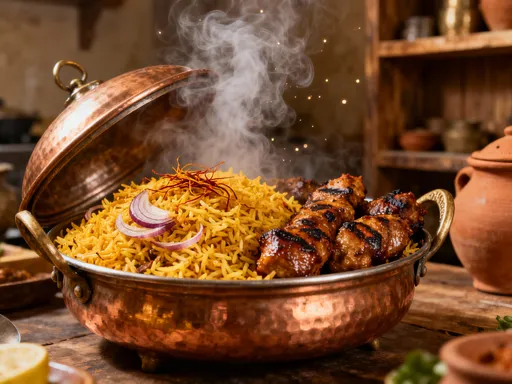
At the core of Awadhi cooking is the technique of *dum pukht* — a method of slow-cooking food in sealed pots over a low flame. The word *dum* means “breath,” and *pukht* means “cooking,” together suggesting a process where food is gently steamed in its own juices. Meat, rice, or vegetables are layered with spices, saffron, and sometimes yogurt or raw papaya paste to tenderize, then the lid is sealed with dough to trap every drop of aroma. The pot is then placed over a charcoal fire, sometimes for hours, allowing the ingredients to meld into a harmonious whole. The result? Biryani where each grain of rice is distinct yet infused with flavor, or *kormas* so rich and velvety they seem to dissolve on the tongue.
What truly sets Awadhi food apart, however, is its reverence for subtlety. While many Indian cuisines rely on bold heat, Awadhi chefs prize restraint. Spices are used not to burn, but to enhance — a whisper of cinnamon, a hint of mace, a touch of star anise. Saffron, imported through ancient trade routes, is used generously, lending dishes a golden hue and floral depth. Kewra water, distilled from pandanus flowers, adds a delicate perfume to both savory and sweet preparations. Even the meat is chosen with care: young goat for kebabs, fatty cuts for slow stews, and often aged for days to deepen the flavor. Every element is considered, every step deliberate. This is not fast food. This is food as art, as legacy, as love.
Must-Try Dishes: Beyond the Famous Kebabs
No visit to Lucknow is complete without tasting its legendary kebabs — and rightly so. The *galouti kebab*, often called the “melt-in-the-mouth” kebab, is a masterpiece of texture and taste. Made from finely minced goat meat, blended with raw papaya paste and a complex mix of over a dozen spices, it is so tender it requires no chewing. Legend says it was created for an aging nawab who had lost his teeth but refused to give up meat. Today, it remains a symbol of culinary innovation and care. Equally impressive is the *kakori kebab*, named after the town where it originated. These kebabs are made from meat taken only from the shoulder and leg, ground with onion, mint, and green chilies, then shaped around skewers and grilled over charcoal. The result is smoky, juicy, and deeply aromatic.
But Lucknow’s food story extends far beyond kebabs. *Boti kebabs*, made from marinated cubes of meat, are succulent and slightly charred at the edges, offering a contrast of textures. *Shami kebabs*, while found across India, take on a special character here — flatter, crispier, and more deeply spiced, often served with a side of mint chutney and sliced onions. For those seeking something heartier, *nihari* — a slow-cooked stew of beef or mutton — is a breakfast staple, rich with marrow and thickened with wheat flour, best enjoyed with flaky *kulcha* bread. Even more complex is *haleem*, a porridge-like dish made by pounding meat, wheat, and lentils together until smooth, then slow-cooked for hours with spices and ghee. It’s dense, nourishing, and traditionally eaten during Ramadan, though available year-round in Lucknow.
And then there are the breads — often overlooked but essential. *Sheermal*, a saffron-infused, slightly sweet flatbread, is baked in a tandoor and pairs beautifully with rich curries. *Roomali roti*, so thin it can be folded like a handkerchief, is a testament to the skill of the roti maker. Even the humble *naan* here is different — softer, richer, often brushed with ghee and sprinkled with poppy seeds. For dessert, *rabri jalebi* — hot, syrup-soaked spirals of fried batter drowned in thickened, saffron-scented milk — is a decadent delight. *Malai ki peda*, made from reduced milk and topped with silver leaf, melts on the tongue like sweetened cloud. These are not just dishes — they are experiences, each one a chapter in Lucknow’s edible history.
Iconic Eateries: From Heritage Dhabas to Hidden Stalls
To taste Lucknow is to visit its legendary eateries — places where recipes have been passed down for generations and where the walls seem to remember every meal ever served. One cannot speak of Lucknow’s food without mentioning Tunday Kababi, a name that echoes through Indian culinary lore. Founded in 1905 by Haji Murad Ali, a one-armed chef (hence “Tunda,” meaning one-armed), this unassuming shop in Aminabad has served emperors, film stars, and food pilgrims from around the world. The *galouti kebab* here is still made using the original spice blend, a closely guarded secret known only to a few family members. The shop has no fancy seating — just plastic stools and a counter — but the line outside speaks volumes. Each kebab is grilled to order, served with naan and a wedge of lemon, and eaten standing up, as if part of a ritual.
Another institution is Idris Biryani, a no-frills stall tucked in a narrow lane near the old city. Open only for lunch, it draws crowds daily for its *Awadhi biryani* — fragrant, mildly spiced, and layered with tender meat and saffron rice. The secret? The rice is cooked separately, then layered with meat and slow-steamed using the *dum* method. The pot is opened tableside, releasing a cloud of steam that carries the scent of cardamom and kewra. The biryani is served with a side of *mirchi ka salan* — a tangy chili curry — and a small bowl of cooling raita. There’s no menu, no signage, just trust in the process and the decades of consistency.
Yet some of the best meals in Lucknow happen in places with no name at all. Near Hazratganj, I found a morning stall run by a woman named Rehana, who has been making *haleem* since she was 18. She arrives at 2 a.m. to begin cooking, stirring the massive pot with a wooden paddle, adding ghee and spices by instinct. Her customers — office workers, shopkeepers, elders — know her by sight. They don’t order; they just nod, and she hands them a steaming bowl. There’s no rush, no plastic packaging — just food served with dignity. These hidden gems, often passed by tourists, are where Lucknow’s true spirit lives: not in grandeur, but in daily devotion to craft, consistency, and community.
Street Food Trails: Where Locals Eat
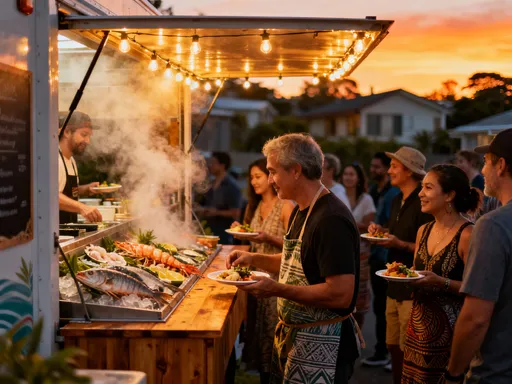
For the curious traveler, the best way to experience Lucknow is on foot, following the scent of grills and spices through its bustling markets. A perfect food walk begins in Aminabad, where the day starts with *nihari* and *kulcha* at one of the old stalls near the clock tower. By mid-morning, the air fills with the sound of *parathas* being slapped on hot griddles, and the smell of *aloo paratha* with butter and pickle draws hungry crowds. As the sun climbs, kebab vendors fire up their tandoors, and the sizzle of meat on charcoal becomes the city’s soundtrack.
From Aminabad, a short rickshaw ride takes you to Hazratganj, Lucknow’s elegant shopping district, where colonial-era buildings house bookstores, boutiques, and charming tea stalls. Here, *doodh patti chai* — strong tea brewed with milk until creamy and golden — is a morning ritual. Served in small glasses on steel trays, it’s sipped slowly, often with a *samosa* or *kachori*. In the late afternoon, the lanes around Hazratganj come alive with *chaat* vendors selling *dahi puri*, *pani puri*, and *aloo tikki* — crisp, spiced potato patties topped with yogurt, chutneys, and sev. The balance of sweet, sour, spicy, and crunchy is exhilarating.
For safety and enjoyment, a few practical tips go a long way. Choose stalls with high turnover — fresh food is safer food. Watch how the vendor handles ingredients; clean hands and utensils are a good sign. Drink bottled water or *nimbu pani* (lemon water) with ice made from purified water. Avoid raw salads unless you see them being freshly washed. And always carry hand sanitizer. But don’t let caution turn to fear. Street food is the heartbeat of Lucknow, and eating it is one of the most authentic ways to connect with the city. With a little mindfulness, every bite can be both delicious and safe.
Tea & Sweets: The Unsung Heroes of Lucknow’s Table
In Lucknow, tea is not just a drink — it’s a moment. Whether it’s the milky richness of *doodh patti chai* at a roadside stall or the soothing warmth of *kahwa* — green tea infused with saffron, cardamom, and almonds — tea is woven into daily life. *Sulaimani*, a dark, lemony black tea popular after meals, is believed to aid digestion and is often served in clear glasses, its deep amber color glowing in the afternoon light. Many families begin and end their day with a cup, shared in silence or conversation. In homes and shops alike, offering tea to a guest is a gesture of welcome, as essential as a smile.
Sweets, too, play a vital role in Lucknow’s food culture. They are not mere desserts, but symbols of celebration, generosity, and care. *Rabri jalebi*, served warm, is a study in contrasts — the crispy, syrupy jalebi against the thick, creamy rabri, scented with saffron and cardamom. *Malai ki peda*, made from slow-cooked milk solids, has a texture like soft cheese and a sweetness that lingers gently. *Sohan halwa*, a dense, nutty confection made with wheat, ghee, and almonds, is often gifted during festivals. These sweets are not just rich — they are balanced, designed to complement the deep flavors of savory dishes rather than overwhelm them.
What’s striking is how desserts are integrated into the rhythm of the day. A piece of *sheermal* with tea in the morning. A small *peda* offered to a visitor. A plate of *jalebi* shared after a family dinner. Sweets are not saved for special occasions — they are part of everyday grace. In a city where food is already an art, these treats are the final brushstroke, the quiet note that brings harmony to the meal. To taste them is to understand that in Lucknow, hospitality is not performed — it is lived.
Bringing Lucknow Home: Practical Takeaways for Travelers
Planning a food-focused trip to Lucknow is easier than you might think. The best time to visit is between October and March, when the weather is cool and pleasant, perfect for long walks and outdoor dining. Flights and trains connect Lucknow to major Indian cities, and once you’re here, auto-rickshaws and ride-sharing apps make getting around simple. Accommodations range from heritage hotels to budget guesthouses, many located near the main food districts of Aminabad, Hazratganj, and Chowk.
For budget-conscious travelers, the good news is that some of the best food is also the most affordable. A plate of kebabs with naan might cost less than $2, and a full biryani meal under $5. Upscale restaurants like Dastarkhwan or Sheesh Mahal offer refined Awadhi dining in elegant settings, but the soul of the city’s cuisine lives in its streets and small eateries. When choosing where to eat, look for places crowded with locals — a sure sign of quality. Don’t be afraid to point and smile; many vendors speak basic English, and food needs no translation.
Respectful dining etiquette goes a long way. Wash your hands before eating, especially when sharing from a common plate. If invited into a home, it’s polite to bring a small gift — perhaps sweets from a famous shop like Ram Asrey or Ghantewala. When eating with your hands, use only the right hand, as the left is considered unclean in traditional settings. And above all, eat slowly. Rushing through a meal is almost unheard of in Lucknow. Meals are meant to be lingered over, discussed, enjoyed. Ask questions, compliment the cook, show curiosity. Most vendors are proud of their craft and happy to share a story. These small gestures build connection and deepen the experience.
Conclusion
Lucknow doesn’t serve meals — it offers memories on a plate. This city teaches you to taste with more than your tongue: with your nose, your hands, your soul. Its food culture isn’t about speed or show, but depth and devotion. Whether you're biting into a melt-in-the-mouth kebab or sipping spiced tea at dawn, you’re not just eating — you’re connecting. The recipes have survived wars, migrations, and time because they are more than instructions; they are heirlooms, passed from hand to hand, heart to heart. Each dish carries the weight of history and the warmth of home.
What makes Lucknow truly special is not just the food, but the philosophy behind it. It’s the belief that a meal should be a moment of peace, a gesture of love, a work of patience. In a world that often values speed over substance, Lucknow stands as a reminder that some things cannot be rushed. The best flavors take time. The deepest connections grow slowly. And the most memorable experiences are often the quietest — a shared plate, a smile from a vendor, the scent of saffron rising from a copper pot.
So go not just to fill your stomach, but to feed your curiosity. Let Lucknow surprise you, one bite at a time. Let its streets guide you, its aromas awaken you, its people welcome you. Come with an open mind, a willing palate, and a slow step. You may arrive hungry — but you’ll leave changed, carrying not just memories of taste, but a deeper understanding of what it means to truly savor life.